About Offerings Events Journal Goddess Guide Contact
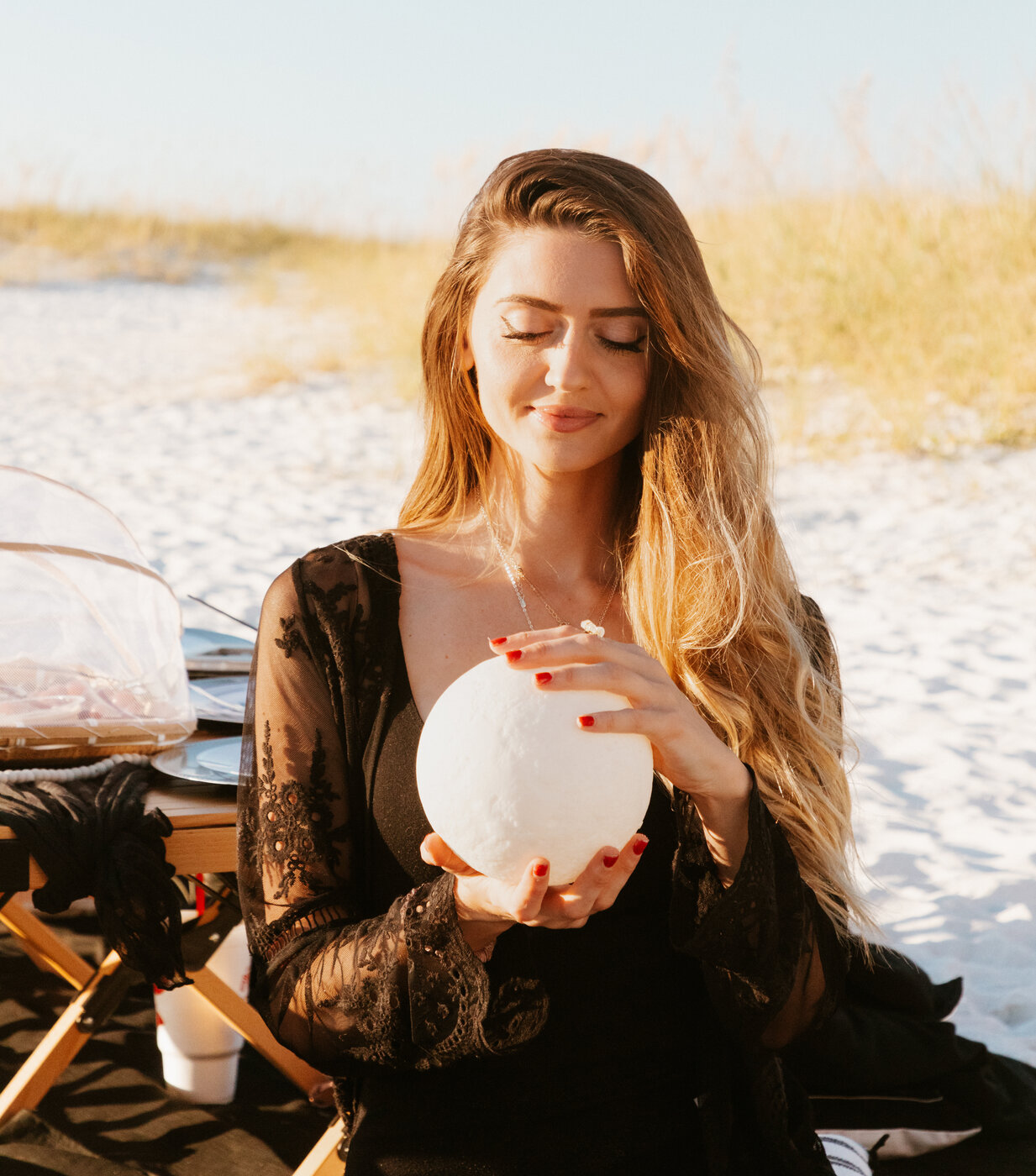
Erza Hana holding a moon
Erza Hana

In my culture, we don't carry middle names, so I gave myself one. Hana is an ode to my matriarchal line, the women whose courage and devotion made my life and path possible. Hanna is my mother's name, and Ana is my grandmother's. In Albanian, Hana also means moon. In a tradition where names pass from father to child, this is my reclamation.

A framed childhood photograph

Ana, my grandmother

A saint of a woman. Her real name was Yıldız, which means star, though I only ever knew her as Ana. She was Albanian with Turkish heritage. Her Turkish tea and five prayers a day were her sacred rituals. Her home in Macedonia had traditional low cushioned seating along the walls, where she gathered mothers and children in a circle. She gave birth to eight daughters and never a son, yet she educated them, which was unheard of in her time and highly disapproved of. Life made her tough, having to bury children and husbands, but it never hardened her spirit. Her faith was her own, and she never spoke ill of a soul. She taught me that devotion makes a heart kind and pure. A decade after she passed, in one of the darkest seasons of my life, she returned to me as a guardian angel and gave me her strength. From Ana, I inherited devotion. She showed me the sacred lives in the ordinary, in small daily acts, in the gathering of women to carry one another through.

Hanna, my mother

Named Hanemsha, after her grandmother. It means lady, a noblewoman of high status, and she has carried it that way her whole life. We call her Hanna, which means moon. She and her sisters were the first women in their bloodline, and their town, to leave home for an education. She married outside her religion, which was defiance back then, and she chose love over what was expected of her. She raised four children and still opened one business after another. The first she named Lady, selling gowns and drapery from fabric she sourced herself in Turkey. My eye for creativity and love of fashion comes straight from her. She was my partner in Picnic Under the Moon, where my women's circles first began. Many Albanian mothers raise their daughters to serve a husband, to stay small and quiet. Mine never did. She taught us to be fiercely independent and bold. From Hanna, I inherited courage. She showed me how to trust my own voice and intuition, even when others questioned it.

The Star taught me devotion. The Moon taught me courage.

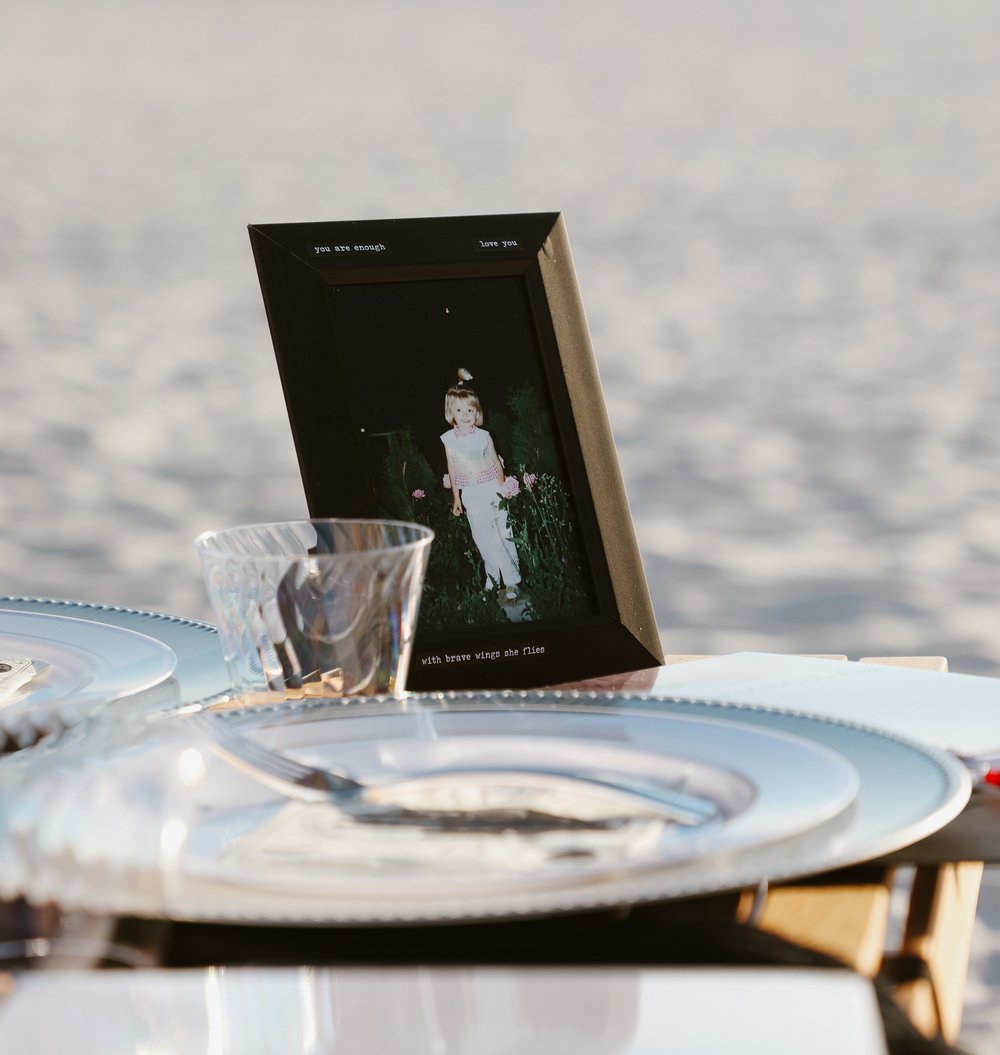
A framed childhood photo of me at one of my gatherings; the frame reads: with brave wings she flies

I've always lived between worlds. I'm Albanian, born in Kosovo, with family from the Albanian communities of Montenegro and Macedonia. I grew up between countries and traditions. My parents came from different faiths, but they passed down culture instead of doctrine. No one ever told me I was born of sin or that a woman was the cause of humanity's fall. I was free to explore the divine in my own way. When I was six, we were uprooted by war. We escaped two days before the border closed and the genocide began, only because my mother trusted her intuition. My father wanted to stay. She said, “No. We leave together. All of us.” We sought asylum in the States and I grew up Albanian and American, but never fully either. I am the third of three daughters. Then came a son. I understood the weight of that before I had the words for it. I was an angry, expressive child, quick to question what felt unfair, and that fire became a lifelong passion for women's rights. I saw the imbalances and harm of our patriarchal culture, and for a long time it kept me at arm's length from my own people. That changed the year my grandmother's spirit came through to me. She told me I was born into this culture for a divine purpose. If my life's work was to advocate for women, then it had to include Albanian women. She reminded me I had been given something rare: a family who would never disown me for speaking up. I understood then that my freedom carried responsibility.

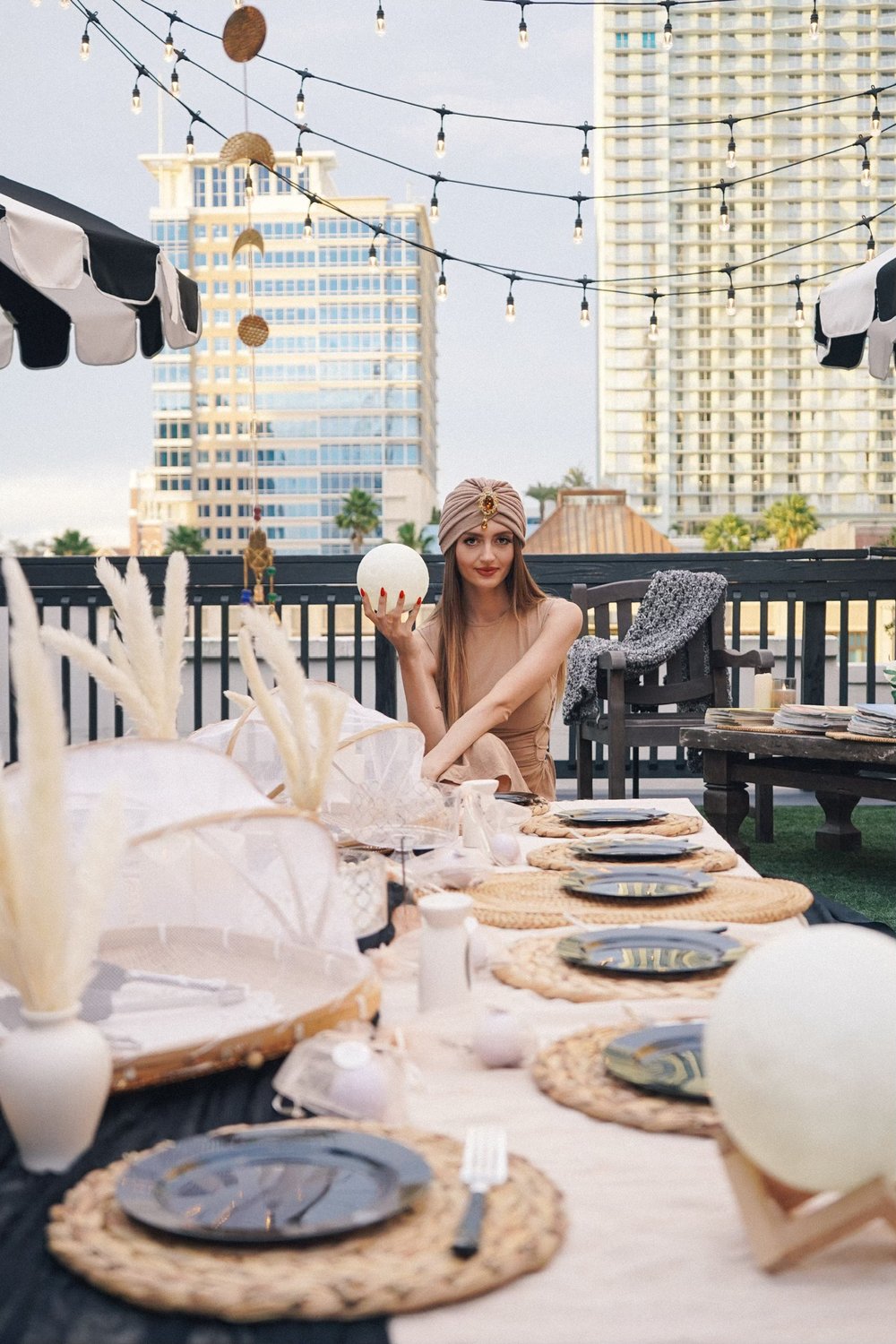
Erza at a Picnic Under the Moon gathering, holding a moon orb at a styled table

I began hosting women's circles to invite women into my world of ceremony with the moon, but instead, they invited me into theirs. Over the years, I've sat with hundreds of women from different generations and cultures as they became mothers, buried loved ones, left marriages, changed careers, and found their way back to themselves. I called it Picnic Under the Moon in honor of the ancient gatherings beneath the moon long before me. The wisdom was always in the room. I watched women recognize themselves in one another, speak truths they had never shared elsewhere, and remember what had always lived within them. I came to understand that my work is to create sanctuaries where women can hear their own wisdom and share it with one another. Then it became my turn. When my womb touched life and death in the same breath, I crossed one of life's deepest rites of passage. Losing my first daughter, Esme, became my womb awakening. It was the first time I truly needed to be held by other women. I had always known my life's work was devoted to women. Now I carried a deeper reverence for what it means to be one. For the divinity that lives within us. For motherhood. For intuition. For creation itself. And for the invisible threads that bind us to one another and to the women who came before us.

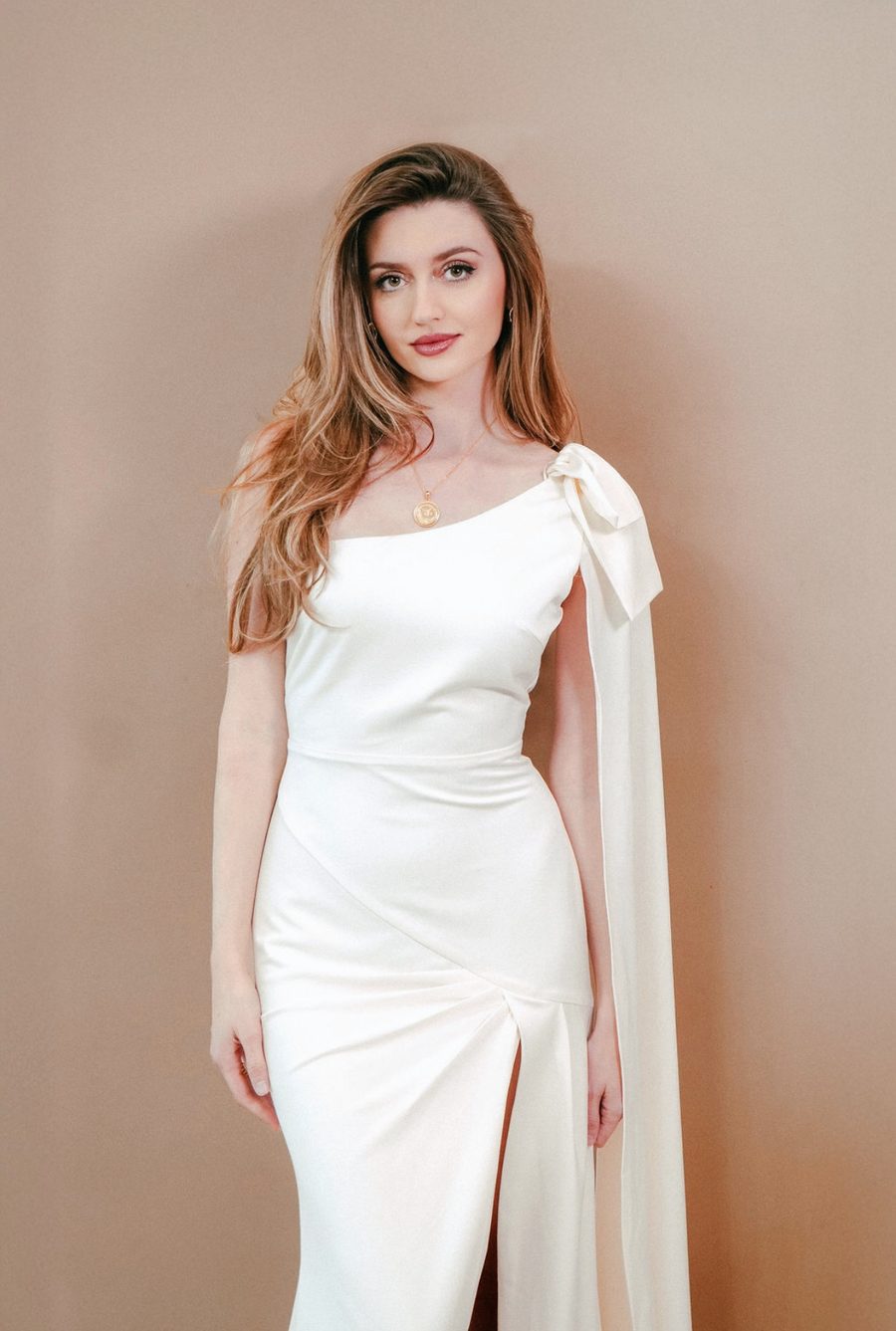
Portrait of Erza Hana
Former Senior Strategist in Cultural & Consumer Insights
Founder of Picnic Under the Moon
Facilitator of hundreds of women's circles since 2021
Fashion Institute of Technology (FIT), New York City
Academic Coursework in Psychology & Women's Studies
Certified Reiki Practitioner
Certified Sound Healer
complimentary
The Goddess Guide.
Soul-nourishing spaces around Tampa Bay.